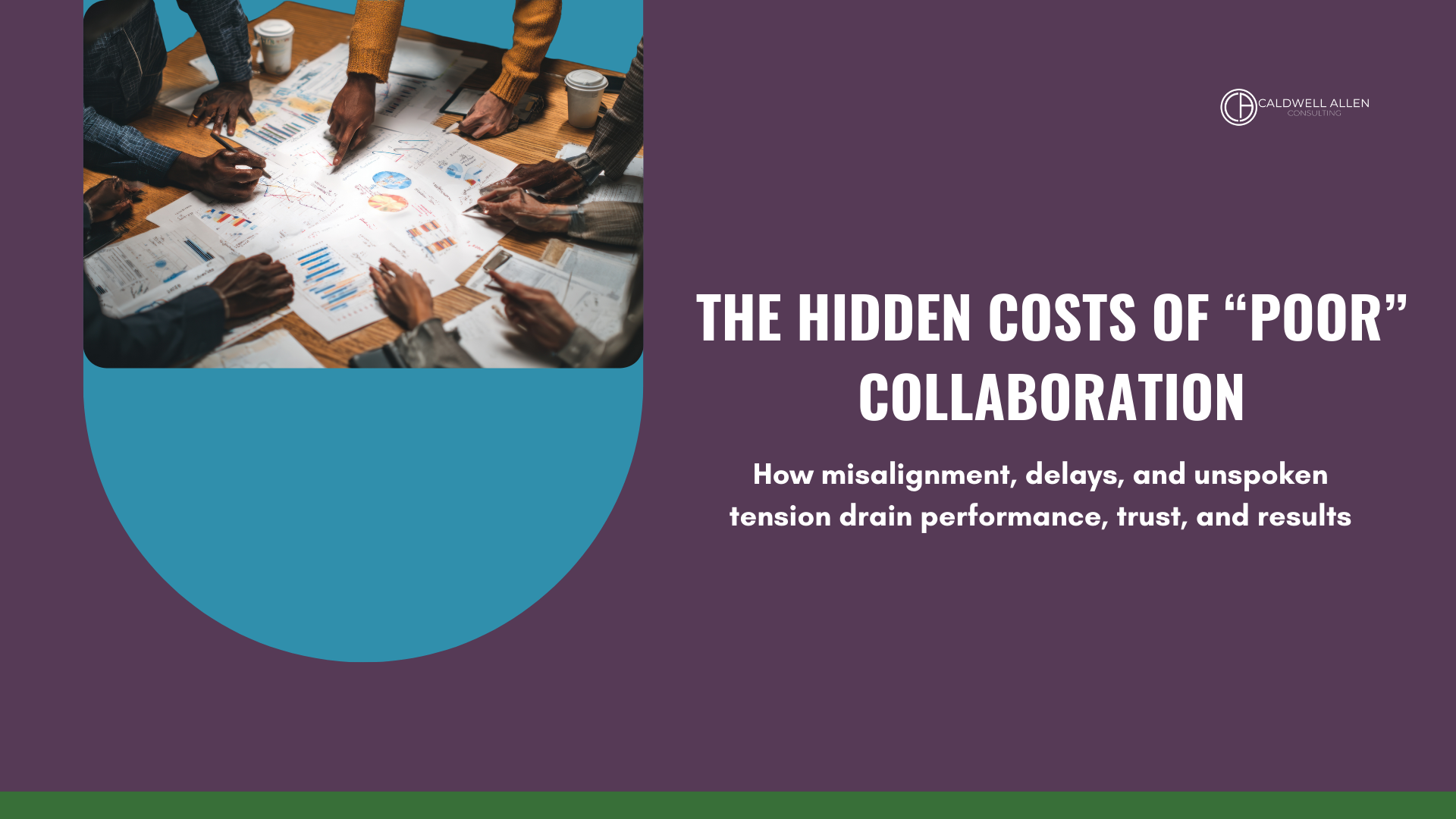
The Hidden Costs of Poor Collaboration
Everyone has felt it. The meeting that goes in circles. The project that lingers past its deadline. The team that quietly works around each other instead of with each other.
On the surface, these moments feel like small frustrations. But step back, and they add up to something much bigger: hidden costs that drain performance, energy, and dollars from your organization.
Why Hidden Costs Matter
Leaders often focus on visible metrics, revenue, profit margins, or customer growth. But what’s rarely tracked are the silent drains created by poor collaboration:
Wasted meeting time: Harvard Business Review found that 71% of managers say meetings are unproductive and inefficient, often equating to thousands of lost hours annually.
Missed handoffs: When teams don’t align on dependencies, small slips ripple into major project delays.
Rework and duplication: Misaligned expectations force teams to redo work — burning time, energy, and morale.
Turnover risk: Gallup research shows that unclear expectations and broken collaboration are top reasons employees disengage and eventually leave.
Individually, these issues look manageable. Collectively, they can cost organizations millions.
Collaboration Isn’t a “Soft” Issue, It’s an Execution System
Think of collaboration like the plumbing in a building. When it’s working, you don’t notice it. But when there are leaks, everything slows down and resources go to waste.
Strong collaboration isn’t just about people “getting along.” It’s about building clarity in how teams:
Share priorities
Coordinate handoffs
Follow through on commitments
When those practices are missing, the leaks compound – silently eroding performance.
Making the Invisible Visible
The good news? Collaboration costs can be measured. By looking at just a few key areas, meeting time, project delays, and turnover, leaders can put a dollar figure to the leaks that were previously invisible.
Once the costs are clear, the path forward becomes clear too: reset how teams align, simplify agreements, and embed accountability into the way work gets done.
Closing Reflection
The next time you’re frustrated by a stalled project or an unproductive meeting, pause and ask:
“What is this really costing us, not just in time, but in momentum, trust, and results?”
Because the real question isn’t whether poor collaboration has a cost. It’s how long you’re willing to keep paying it.
Interested in learning more? Grab 20 minutes with me. I’m happy to share resources relevant to your role, whether you’re in HR or leading a team of your own.